
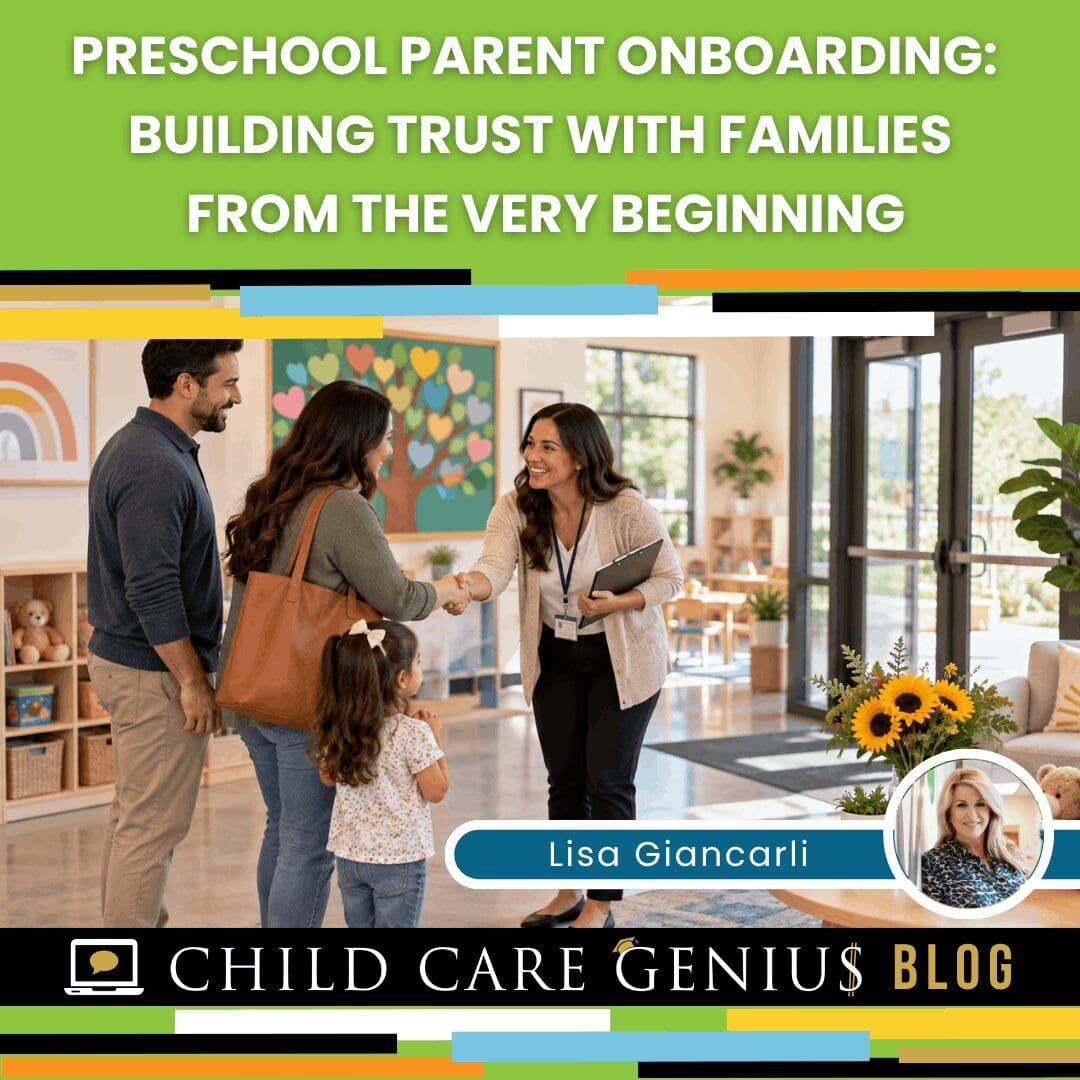
By Lisa Giancarli
In today’s childcare world, having a smooth and thoughtful parent onboarding process is essential for setting families up for success. A well-planned onboarding experience makes parents feel welcomed, informed, and confident they’ve made the best choice for their child. It also helps your center run more smoothly, creating a positive experience for everyone involved.
The journey begins with an inquiry. Families schedule a tour, giving you the perfect opportunity to showcase your center’s environment, curriculum, and values. To make the most of this time, a pre-tour questionnaire can help you learn more about the child and family’s needs. Once the tour wraps up and families move forward with enrollment, the real connection begins—parent onboarding!
The Heart of Parent Onboarding
The goal of a parent onboarding process is to make communication easy and reduce stress for families. Handling paperwork—like medical records, emergency contacts, and consent forms—in an organized way makes life easier for both parents and staff. Clear instructions on what to bring and what to expect help parents feel confident and prepared for their child’s first day. Sharing key details with teachers, such as dietary needs or special instructions, ensures each child receives personalized care in a supportive environment.
The Parent Handbook: A Family’s Go-To Resource
Your Parent Handbook is more than just a stack of policies and procedures—it’s a guide that gives parents peace of mind. Covering key topics like tuition, illness policies, classroom routines, and discipline guidelines, it helps families understand how your center operates.
This resource ensures transparency and sets clear expectations. Parents can quickly find answers to questions like how sick days are handled or what to do during emergencies. A strong handbook empowers parents to be active partners in their child’s early education journey, fostering trust and collaboration.
Why Onboarding Matters
Investing in a thoughtful parent onboarding process benefits your center in countless ways. Families who feel supported, valued, and informed from the start are more likely to stay engaged as long-term partners in their child’s education.
A smooth onboarding process helps parents transition effortlessly into your center’s environment. By removing stress and making everything as clear and simple as possible, families feel confident as their child embarks on this exciting new chapter.
Communication is Key
Keeping communication open is the foundation of a great onboarding experience. Regular touchpoints—like emails, parent-teacher meetings, or weekly updates—help parents feel connected and supported. When families know they can easily ask questions or provide feedback, trust and collaboration naturally grow.
The Welcome Packet: A Must-Have Tool
A Welcome Packet is an invaluable resource to guide families through the onboarding process. Think of it as a roadmap for navigating the new experience. Here’s what to include:
- Welcome Letter: A warm introduction to your center and team, helping families feel connected from day one.
- Who’s Who: A directory of teachers, directors, and admin staff, so parents know who to contact for specific needs.
- Classroom-Specific Details: Information on what to bring, daily schedules, teacher bios, and parking/drop-off instructions to make mornings stress-free.
This handy guide ensures families feel prepared and ready to partner with your center.
The Power of Personal Connections
Face-to-face interactions are one of the most meaningful parts of onboarding. Hosting an in-person onboarding meeting lets families connect directly with your staff and experience your center firsthand. Key elements of this meeting include:
- Form Review: Walking parents through medical records, emergency contacts, and consent forms ensures everything is clear and complete.
- Classroom Tours: Showing parents their child’s classroom eases nerves and builds excitement.
- Teacher Introductions: Meeting the staff who will care for their child builds trust and sets the stage for open communication.
- Parent Handbook Overview: Walking through policies and expectations gives parents clarity and the chance to ask questions.
These thoughtful touches make families feel supported and excited to join your center.
Personalization Makes All the Difference
Every family is unique, and your onboarding process should reflect that. By embracing cultural preferences and understanding individual learning needs, you create a nurturing and inclusive environment where every child can excel.
Ongoing Support Through Follow-Ups
Building strong relationships with families doesn’t end with onboarding—it’s just the start of an ongoing partnership. Thoughtful follow-ups after the first day and first week help families feel supported, valued, and connected:
- First-Day Check-In: A quick call or message from the director asking how the parent is doing and if they have any questions or concerns can show you genuinely care about their experience.
- First-Week Follow-Up: Touch base again to address any lingering questions or concerns from the parent or your staff. This open communication sets the stage for trust and collaboration.
A strong onboarding process isn’t just about those initial steps—it’s the beginning of a lasting relationship. Regular follow-ups after the first day and first week reinforce your commitment to each family’s experience. Checking in with parents shows you value their feedback and provides an opportunity to address questions or share insights from your team. These efforts help families feel connected, ensuring your center remains a welcoming, supportive space where children and families can continue to grow and succeed for years to come.